
Midline Barrier
The midline barrier is a difficulty crossing or using both sides of the body smoothly, which can make tasks like reading, writing, and tracking a line of print challenging.
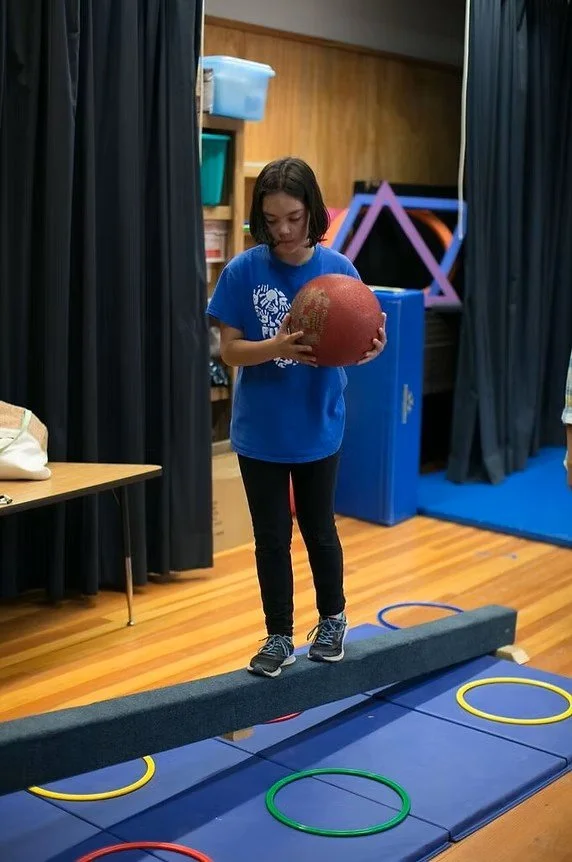
Every child is born with a midline barrier, which means their eyes are not yet able to smoothly track across the center of the body. Physical movement and targeted activities help integrate the eyes so they can move smoothly from left to right and right to left. With adequate eye-tracking practice, most children develop smooth tracking by age seven. The IPM program is designed to strengthen this integration through specific activities that support reading, writing, and test-taking.
Smooth eye tracking is essential for success in reading, math, and standardized testing. For the eyes to track across a page, both hemispheres of the brain must communicate through the corpus callosum. If a midline barrier remains, these tasks become difficult—and sometimes nearly impossible. With consistent movement activities, the midline barrier can diminish and eventually disappear.
Causes of a Midline Barrier
Some children do not get enough movement—or the right types of developmental activities—during early childhood, leaving the midline barrier unintegrated beyond age seven. When children engage in the correct activities, the corpus callosum develops fully, allowing both hemispheres of the brain to communicate effectively. Unfortunately, many children today are not receiving these developmental experiences.
In one case study, 27 students who were below grade level in reading participated in 10 weeks of IPM midline activities. Their reading efficiency improved by an average of 10 months—in just 10 weeks.