
Improving Balance
Balance is the body’s ability to stay steady and controlled using information from the eyes, the sense of touch, and the inner ear. When these systems work together, children can sit upright, move confidently, and stay focused on classroom tasks.
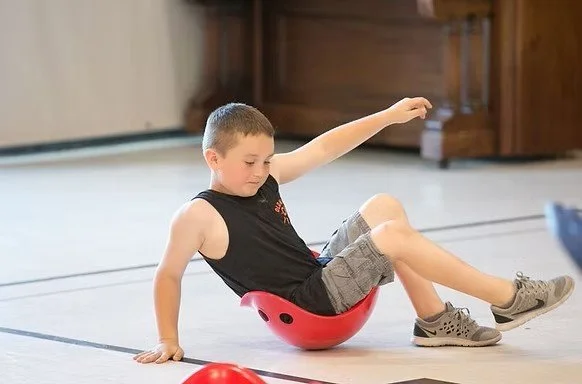
Good balance is essential for success in the classroom. It helps children sit upright, stay focused, and participate in tasks like reading, writing, copying, and test-taking. Balance relies on three systems working together—the eyes, the tactile or touch system, and the vestibular system in the inner ear. When balance is weak, children may slide down in their chairs, fidget, or struggle to stay engaged. Strengthening balance through targeted movement can improve posture, attention, and overall classroom performance.
Poor Balance or ADHD?
Because balance depends on vision, touch, and the vestibular system, difficulties in any one of these areas can make it hard for a child to maintain stability. These challenges often look like symptoms of ADHD—such as restlessness, fidgeting, or difficulty focusing. As a result, some children may be misdiagnosed when the underlying issue is actually a balance problem. Improving balance through structured activities can reduce these behaviors and support better focus and self-regulation.